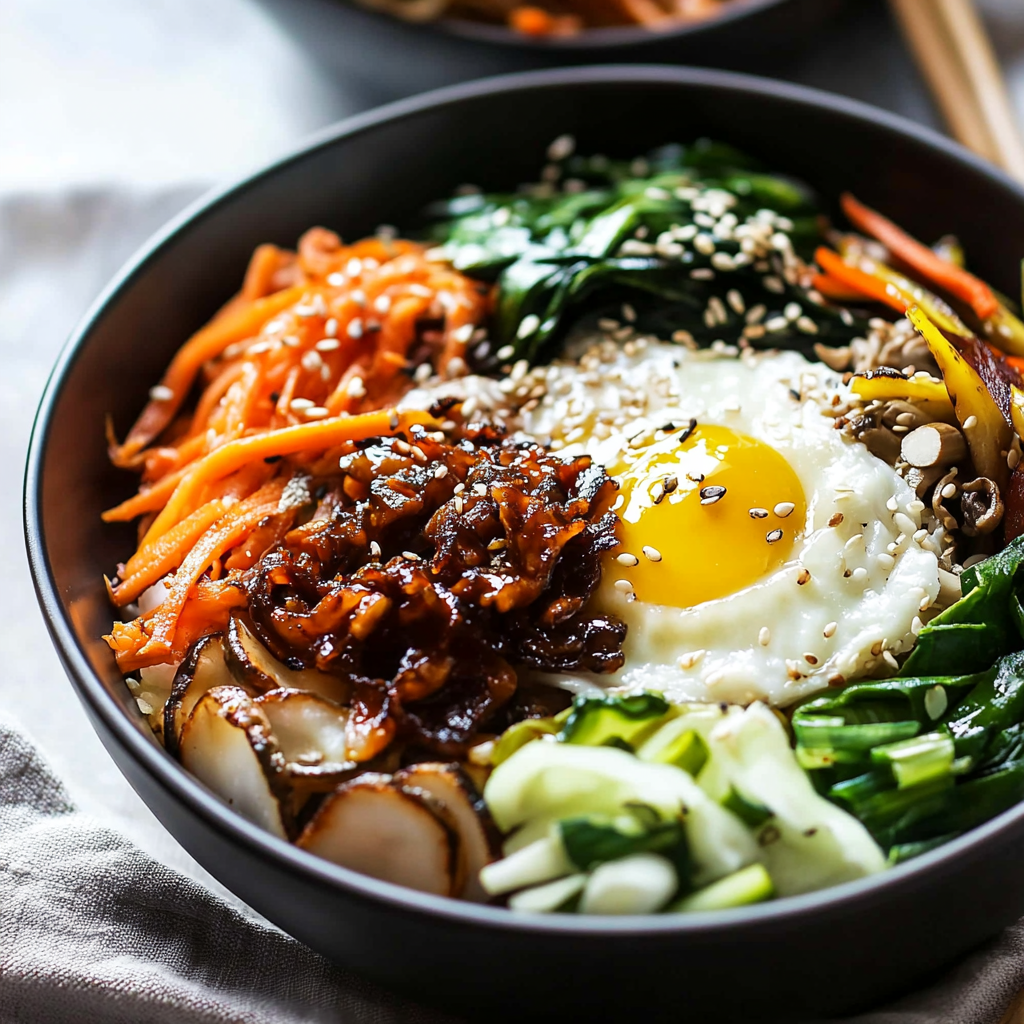
Bibimbap is not just another dish; it’s a colorful culinary masterpiece that tantalizes your taste buds and warms your heart. Imagine a bowl brimming with vibrant vegetables, perfectly cooked rice, and a sunny-side-up egg perched on top, all drizzled with savory gochujang sauce. The fusion of textures and flavors will have you swooning with every bite, making it the ultimate comfort food for any occasion.
When I first stumbled upon this bibimbap recipe, I was hosting a dinner party and wanted to impress my friends. Little did I know, I’d end up creating a delightful chaos in my kitchen that led to laughter and unforgettable memories. Whether it’s for a casual weeknight dinner or an extravagant gathering, bibimbap never fails to steal the show, leaving everyone craving more.
Why You'll Love This Recipe
- This bibimbap recipe is incredibly easy to whip up, making it perfect for busy weeknights
- The explosion of flavors will have your taste buds dancing with joy
- Its stunning presentation makes it a feast for the eyes as well as the palate
- Plus, you can customize the ingredients based on your preferences or what’s in your fridge!
Cooking bibimbap has always brought my family together, with everyone eagerly awaiting their turn to build the perfect bowl.
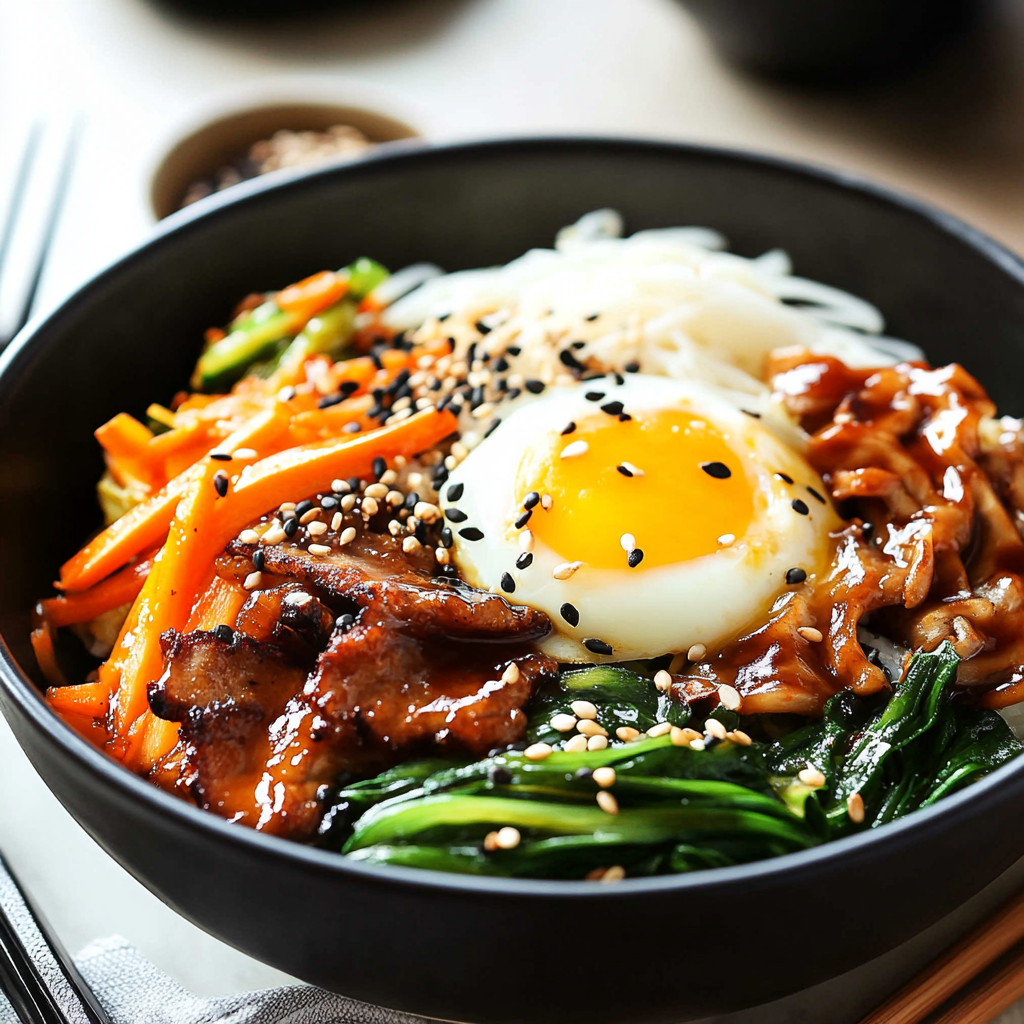
Essential Ingredients
Here’s what you’ll need to make this delicious dish:
Short Grain Rice: This sticky rice is essential for holding everything together in your bowl.
Carrots: Julienne or shred them for a sweet crunch that adds color and texture.
Zucchini: Lightly sautéed zucchini brings a subtle flavor that complements the other ingredients beautifully.
Spinach: Blanching spinach enhances its vibrant green color while keeping it tender and flavorful.
Mushrooms: Use shiitake or button mushrooms for an earthy depth of flavor.
Eggs: A fried or poached egg adds richness and creaminess when mixed into the bowl.
Gochujang Sauce: This spicy-sweet Korean chili paste ties all the flavors together with its bold kick.
Sesame Oil: A drizzle of toasted sesame oil enhances the aromatic qualities of this dish.
Beef (or Tofu): Thinly sliced marinated beef or tofu provides protein and heartiness.
The full ingredients list, including measurements, is provided in the recipe card directly below.
Let’s Make it Together
Start by preparing the rice: Rinse 1 cup of short-grain rice under cold water until the water runs clear. This removes excess starch and ensures fluffy rice.
Prepare the vegetables: Slice carrots, zucchini, and mushrooms thinly. Heat a pan over medium heat with a splash of oil. Sauté each vegetable separately until tender but still vibrant, seasoning lightly with salt.
Blanch spinach: Bring a pot of salted water to boil. Add fresh spinach leaves for about 30 seconds until wilted. Drain immediately and rinse under cold water to stop cooking.
Cook your protein: If using beef, marinate thin slices in soy sauce, garlic, and sesame oil for at least 30 minutes. Cook in a hot pan until browned—about 3-4 minutes on each side—or sauté tofu until golden.
Fry eggs: In the same pan used for veggies or protein, crack an egg (or two) into hot oil until edges are crisp but yolk is still runny—this adds creaminess when mixed into bibimbap!
Assemble your bowl: Start with a generous scoop of rice at the bottom. Lay out sautéed vegetables attractively around the edges—carrots here, zucchini there—then add protein on top. Finish with a fried egg in the center.
Drizzle gochujang sauce and sesame oil over everything: Take delight in watching how these sauces bring life to your bibimbap! Serve immediately while everything is warm and inviting.
Enjoy this delightful journey into Korean cuisine where every bite offers layers of flavor—trust me; your taste buds will thank you!
You Must Know
- This bibimbap recipe is a delightful mix of flavors and textures
- The vibrant colors and aromas make it visually stunning
- You can easily customize it to fit your taste buds, making each bowl a personal masterpiece that everyone will enjoy
Perfecting the Cooking Process
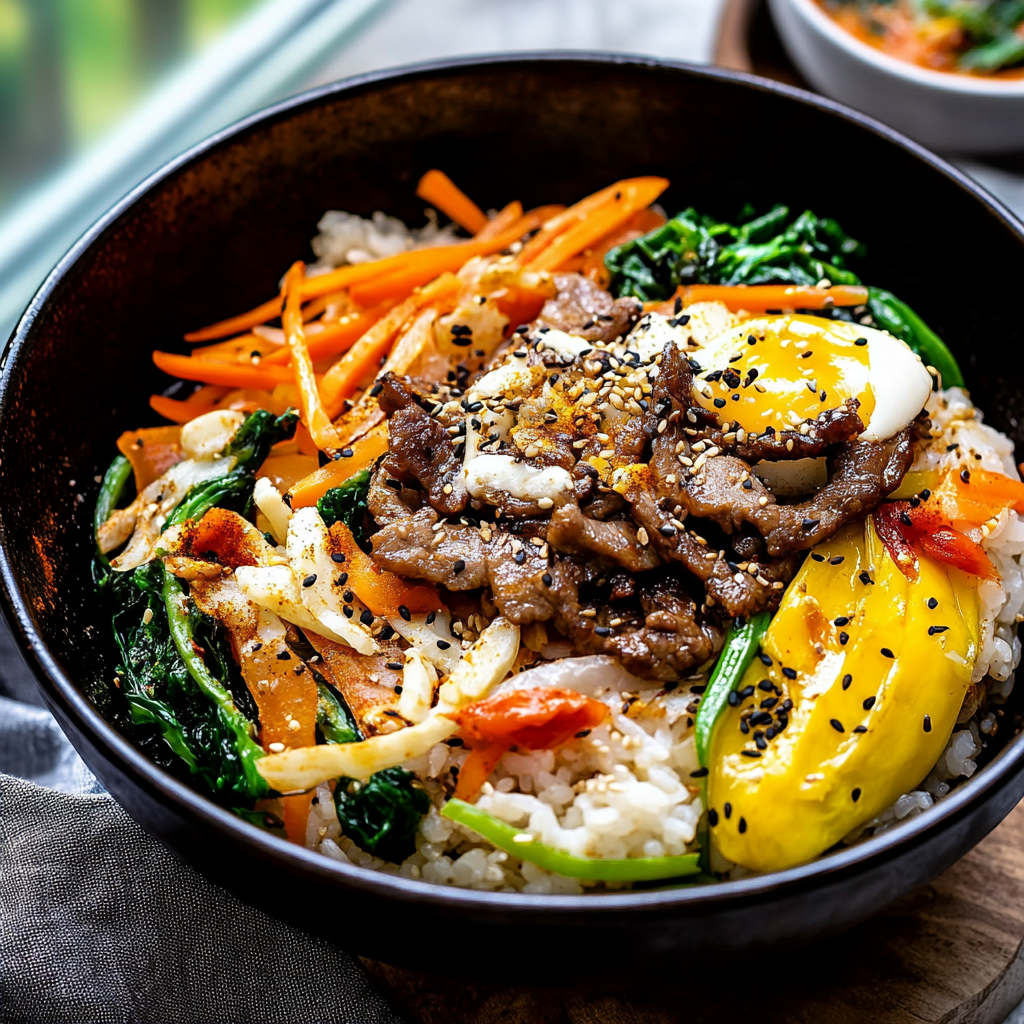
Start by cooking the rice first, then sauté your vegetables while preparing the protein. Keep everything warm until plating for a delicious, steaming bowl.
Add Your Touch
Feel free to swap out vegetables based on what’s in season or what you have in your fridge. You can also try different proteins like chicken, beef, or tofu to elevate your bibimbap experience.
Storing & Reheating
Store leftovers in an airtight container in the fridge. To reheat, microwave until hot or sauté quickly in a pan with a splash of water to maintain texture.
Chef's Helpful Tips
- For the best flavor, use freshly cooked rice—day-old rice can be too dry
- Don’t overcrowd the pan while sautéing veggies; this ensures even cooking and vibrant colors
- Lastly, always taste as you go to adjust seasoning to perfection
Sharing my first bibimbap experience was unforgettable; friends were amazed at how such simple ingredients could create a culinary masterpiece right at home.
FAQ
Can I use brown rice for this bibimbap recipe?
Absolutely! Brown rice adds a nutty flavor and extra nutrition but requires longer cooking time.
What vegetables should I include in my bibimbap recipe?
Feel free to choose any seasonal vegetables like spinach, carrots, zucchini, or mushrooms for great color and flavor.
How do I make my bibimbap spicy?
Add gochujang (Korean chili paste) for heat and depth; adjust according to your spice tolerance for balance.
Bibimbap
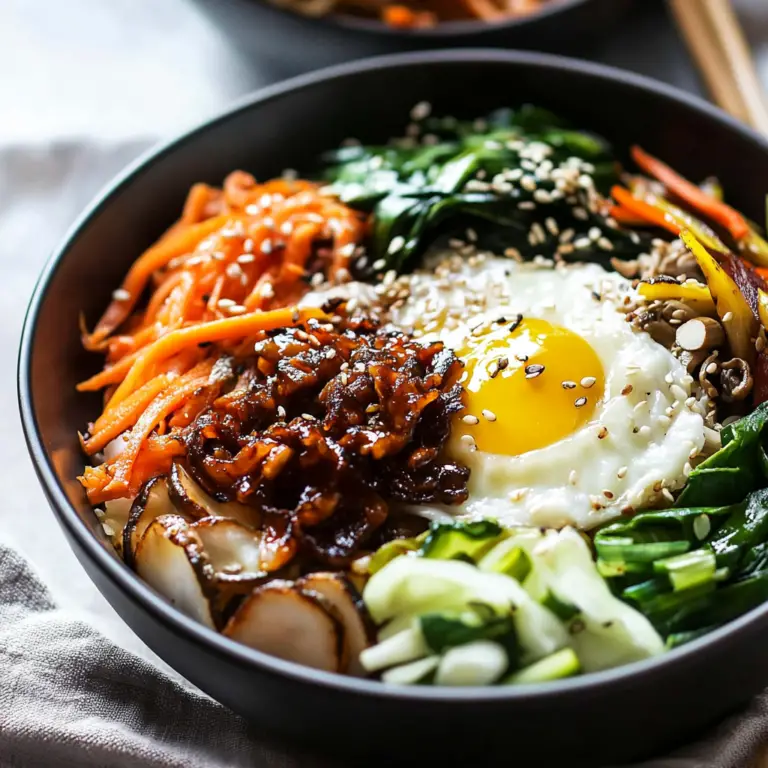
Bibimbap is a vibrant Korean dish that perfectly marries flavors and textures in a single bowl. Picture fluffy short-grain rice topped with an array of colorful sautéed vegetables, a rich fried egg, and a drizzle of spicy gochujang sauce. This customizable meal is not only visually stunning but also quick to prepare, making it ideal for both busy weeknights and festive gatherings. With its delightful blend of taste and nutrition, bibimbap is sure to become your new favorite comfort food!
- Total Time: 35 minutes
- Yield: Serves 2
Ingredients
- 1 cup short-grain rice
- 1 medium carrot, julienned
- 1 medium zucchini, sliced
- 2 cups fresh spinach
- 1 cup mushrooms (shiitake or button), sliced
- 2 large eggs
- 2 tbsp gochujang sauce
- 1 tsp sesame oil
- 4 oz beef (or tofu), thinly sliced and marinated
Instructions
- Rinse the rice until water runs clear; cook according to package instructions.
- Sauté carrots, zucchini, and mushrooms separately in a pan with oil until tender.
- Blanch spinach in boiling salted water for 30 seconds; drain and cool.
- Marinate beef in soy sauce, garlic, and sesame oil for at least 30 minutes; then cook until browned.
- Fry eggs in the same pan until edges are crispy but yolks remain runny.
- Assemble bowls with rice at the base, arranged vegetables on top, protein in the center, and a fried egg over everything.
- Drizzle with gochujang sauce and sesame oil before serving.
- Prep Time: 15 minutes
- Cook Time: 20 minutes
- Category: Main
- Method: Sautéing
- Cuisine: Korean
Nutrition
- Serving Size: 1 bowl (400g)
- Calories: 550
- Sugar: 4g
- Sodium: 600mg
- Fat: 18g
- Saturated Fat: 5g
- Unsaturated Fat: 11g
- Trans Fat: 0g
- Carbohydrates: 80g
- Fiber: 6g
- Protein: 24g
- Cholesterol: 186mg